



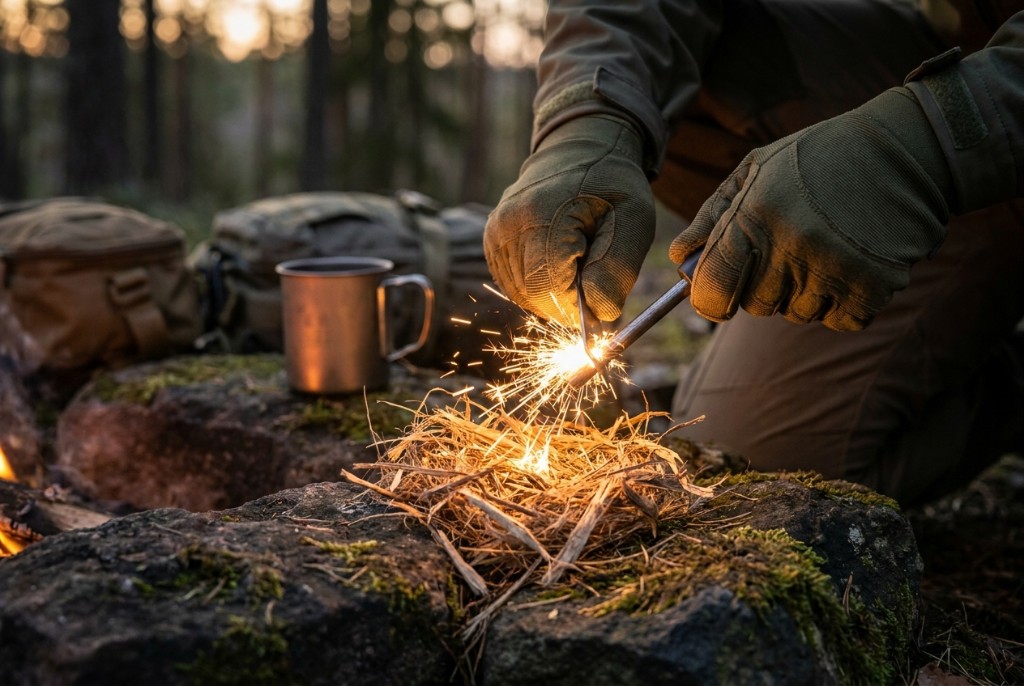
Making fire in the hills is no mystery and not a TV trick: it is plain chemistry and, above all, patience. For it to work you need the usual triangle (heat, fuel, and oxygen) and you must follow the order strictly: good tinder that catches the spark first time, fine kindling to build it up, and fuel wood from smaller to larger.
If you use a ferro rod or flint and steel, it is straightforward if you aim at the right spot. Always look for tinder that is truly dry: scraped birch bark, tinder fungus, thistle down, or pine resin. Forget green moss or fallen branches that have spent days soaking up ground moisture; look for dry sticks still hanging in trees, sheltered from the wind. With a ferro rod, scrape hard and firmly, letting the spark fall right on the tinder. With flint, strike the steel against the stone and direct the spark into the bundle.
Friction fire (bow drill or rubbing wood) or sparks from flint looks great on video, but in reality it takes hours of practice and the right weather. Do not trust yourself because you watched four YouTube videos; save those methods for a Sunday afternoon in a controlled setting, not for your first genuinely cold night in the middle of nowhere.
When building it, find clean ground, cleared earth, or a stone bed, well away from roots that could burn underground or low branches. Build a small tipi or lean-to structure so air flows well. Start with twigs pencil-thick, move up to finger-thick, and only when the flame is stable add logs.
Important note: watch the law. In Spain seasonal bans on open fires are very strict and fines are painful. Carrying a survival kit in your pack does not give you immunity.
To finish, fire is not left "half out". Drown it with water, stir the ash, pour water again, and check it is cold to the touch before you leave. Always carry more water than you think for this. Fire is your best ally for warmth and cooking, but if you lose focus for a second, you destroy the hills.